Cloud platforms that pass the audit and survive the incident.
494 Group builds cloud platforms and the software that runs on them: applications, APIs and the integrations between systems, with compliance, logging, monitoring and automated updates designed in rather than bolted on afterwards. Operated through the audits and the outages, then handed over documented and running. Led by one principal engineer, with specialists brought in when the work calls for it.
What those numbers mean
Four engagements, measured the way the client measured them.
The deployment path. The first regional build was done by hand and took nine months. Automating it took a global cloud service to three weeks per region, against a target of four. Expansion moved to a quarterly cadence instead of an annual one, and work that used to fill most of a year became something the business could plan around. The automation was the deliverable; the schedule was what it bought.
The regulatory submissions. Meeting FSMA 204 used to mean assembling and filing data by hand, daily, at every site that had to comply. The platform submits in real time instead, and it ships as a capability to every customer on the service rather than a project each one runs separately. At the site that proved it, that was two people's daily job, and it put both of them onto work that mattered more. The next customer never has to find two.
The global build-out. Object storage and key management reached past 45 data centers over eight years: every region worldwide except the two single-campus locations, which are the only ones not built like the rest. Both are services other companies had built their businesses on, so each new region had to come up without disturbing the ones already carrying traffic.
The installed base. Seven hundred corporate tenants moved in four waves, each wave a block of customer databases backed up and restored across a Friday-to-Monday window, then brought up and validated one at a time before anyone relied on them. The waves were scheduled around which customers were available and ready, not around what was convenient to run.
What I get called for
Usually before the planning starts. Sometimes to course-correct.
A platform that has to pass an audit
Compliance designed into the platform rather than assembled at audit time: policy scanning before infrastructure exists, a security review every new capability clears, and a platform that produces its own evidence.
Build, test and deploy still done by hand
Replacing manual deployments with an automated path from build through test to production, so a release stops depending on who is available to run it and a second environment costs hours instead of weeks.
A product to build, not just a platform to run it on
Cloud applications, APIs and the integrations that connect them to systems somebody else owns. Compliance, logging, monitoring and unattended updates are part of the design rather than a later phase, because retrofitting them costs more than building them in and usually lands just before an audit.
Critical workloads that cannot break during the move
A migration is only as safe as your ability to rehearse it, and nothing hand-assembled can be rehearsed. Automating the build, test and deploy path comes first; that is what turns a seven-hundred-tenant move into something you can practice, wave by wave, inside a window the business agreed in advance.
Software built with AI agents, without shipping the wrong thing
Coding agents run under defined roles, with automated gates every change clears and an independent reviewer whose job is to break the work before it ships. The failure worth designing against is not bad code but confident code that duplicates what the codebase already has. Engineers are brought onto that way of working rather than left to find it.
More to deliver than the team can carry
An executive with a mandate, and architects already building new capability while keeping the existing platforms running. Both at once is what runs a good team out of room. I add senior capacity alongside them rather than oversight above them, come up to speed quickly on what is already built, and work with the architects and the executive together toward what they are trying to achieve.
A team that has to own it after I leave
Hiring, onboarding and technical leadership for the group that inherits the platform. On one engagement I mentored a senior engineer through taking the architecture on; he is now that company's principal architect for it, hired directly by them. The handover is the deliverable.
Regulated is the normal case here, not a specialism
Most of the last decade has been platforms someone else has to certify.
HIPAA, HITRUST
A compliant Databricks platform for a national healthcare payer: every environment provisioned as code through one pipeline, policy scanning catching misconfiguration before infrastructure exists, and a standing security review each new capability clears before anyone can use it.
SOC 2
Five years leading SOC 2 audits for a key management platform inside a global public cloud, and deciding what evidence the platform itself should produce rather than assembling it by hand each year.
FedRAMP, PCI-DSS, ISO 27001
Took part in those audits for the same platform, and planned the architecture and product features that made the service auditable in the first place.
Continuity
Business-continuity and disaster-recovery runbooks written at design time and exercised annually, deliberately without the people who built each service, because the point is to find the steps that exist only in someone's head.
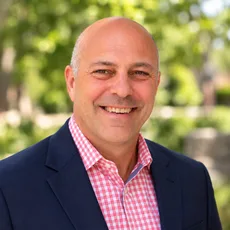
One principal, nearly thirty years in.
I am Scott Rooke. 494 Group, Inc. is a Minnesota S-corporation, incorporated in 2017, and I have been taking work through my own company since 2006. The work is led and delivered by one principal engineer, which is why the estimate is honest and the person who scoped it is the person who builds it.
I have been consulting since 1997. Eight of those years, beginning in 2015, were spent inside a global public cloud, where I built out and then ran the key management and object storage services other companies had built their businesses on. Both went to every region worldwide except two, past 45 data centers. If the key management service is down, nothing encrypts or decrypts. If object storage is down, nothing can write a log. You design differently once that is your problem, and you find out quickly what it costs to get it wrong.
When an engagement needs more hands than one, I bring in specialists I have worked with directly. There is no bench to keep busy and no handover to someone you have not met. I have built the large version of this: one engagement grew from a team of one to more than seventy engineers across thirteen product teams, and I did the hiring, the onboarding and the technical leadership for it.
How engagements work
- Entity
- 494 Group, Inc., a Minnesota S-corporation since 2017
- Contracting
- Corp-to-corp through my company
- Or as a subcontractor through a consulting partner
- Work
- Architecture and design, through to the running system
- Hands-on build: application code, infrastructure, pipelines, automation
- Migration planning and delivery leadership
- Compliance and audit readiness
- Senior capacity alongside architects already stretched between new capability and the platforms they are keeping running
- Fractional technical leadership through a transition
Most engagements are a mix, and which one leads changes as the work moves.
- Location
- Minneapolis, Minnesota
- On site across the Twin Cities metro
- Travel as the engagement needs it
- Remote otherwise
Kick-offs and working sessions tend to go better in person.
- Scale
- One principal by default
- Specialists I have worked with, added per engagement when the scope needs them
Field notes
The parts of the work that will not fit in a résumé bullet, written up at the length they take to say properly.
- One developer, production scale
What working with AI coding agents actually buys a sole developer running a multi-tenant platform in production, and the three things it does not buy.
- Agents don't fail at writing code. They fail at knowing what already exists.
The hard part of agentic development is not generation. It is knowing what is already in the tree, and nothing about a language model makes it good at that.
- A gate that only ever passes is no gate
Most test suites prove that code works. Almost none prove that the tests would notice if it stopped.
Tell me what you are up against, and I will tell you what I would do about it.
Useful to include: what you are building or moving, what regulatory regime it sits under if any, roughly when it needs to happen, and whether you need someone to design it, to lead the team building it, or both.